
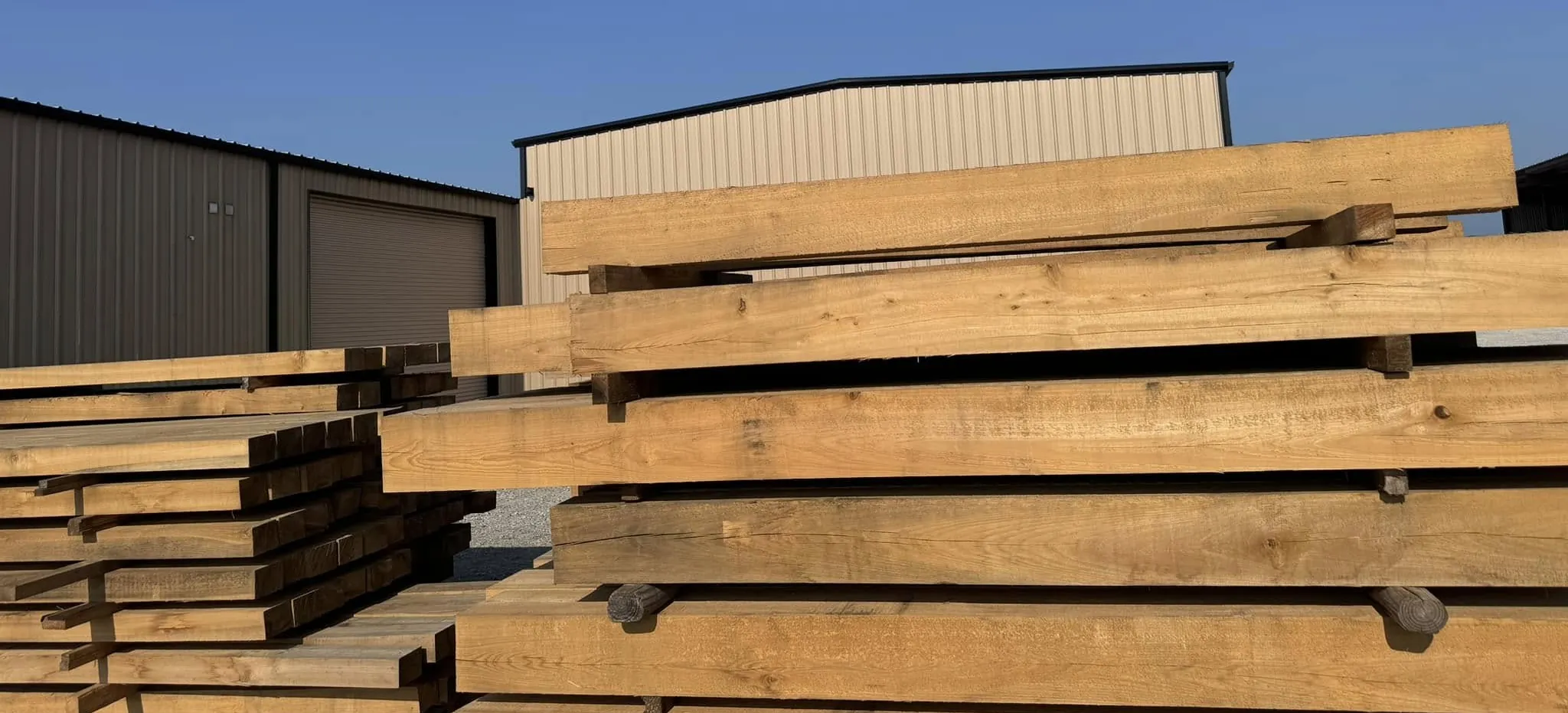
A family, a yard, and a lot of old timber
Mansura, Avoyelles Parish, Louisiana
It started in Plaucheville
Jody and Candace Chenevert started J&C Wood Products out of Plaucheville, Louisiana — a town of about 288 people, fifteen minutes from where the mill sits now. Between them they had already spent more than two decades in hardwood.
The business grew the way businesses grow in Avoyelles Parish: one floor at a time, mostly on word of mouth, with a reputation for turning out consistent product at a price that did not need explaining. That is still how most of our work comes in.
Today the shop runs out of 340 Industrial Boulevard in Mansura. Four people, one yard, and whatever came off the last building we bought.
Who you'll deal with
- Jody ChenevertOwner
- Scott CocoSales & marketing
- Dustin MoreauMill & project manager
- Sherry BordelonAdministration
Four hundred years of longleaf
1600s
First cut
English settlers find longleaf pine standing across ninety million acres from southern Virginia to southeastern Texas, and start cutting it for masts and hulls. The USS Constitution is built out of it.
1700s
It goes into the country
Heart pine ends up under Independence Hall, in Washington's house and in Jefferson's. It is the default structural timber of the eastern seaboard because nothing else that cheap is that strong.
1880–1920
The mills take it
The Industrial Revolution wants framing, factory decking and mill floors. By 1900 more than eighty million acres are gone. What is cut goes into the textile mills and warehouses that are still standing today.
Now
Two percent
Two percent of the original forest is left, and it isn't for sale. Every board of true old-growth heart pine on the market today came back out of a building.
A longleaf pine took five hundred years to mature and put on an inch of diameter every thirty. There is no way to make more of it. The only honest source is a building that already has it, and the only honest thing to do is get it out before the building is burned.
What happens to a timber
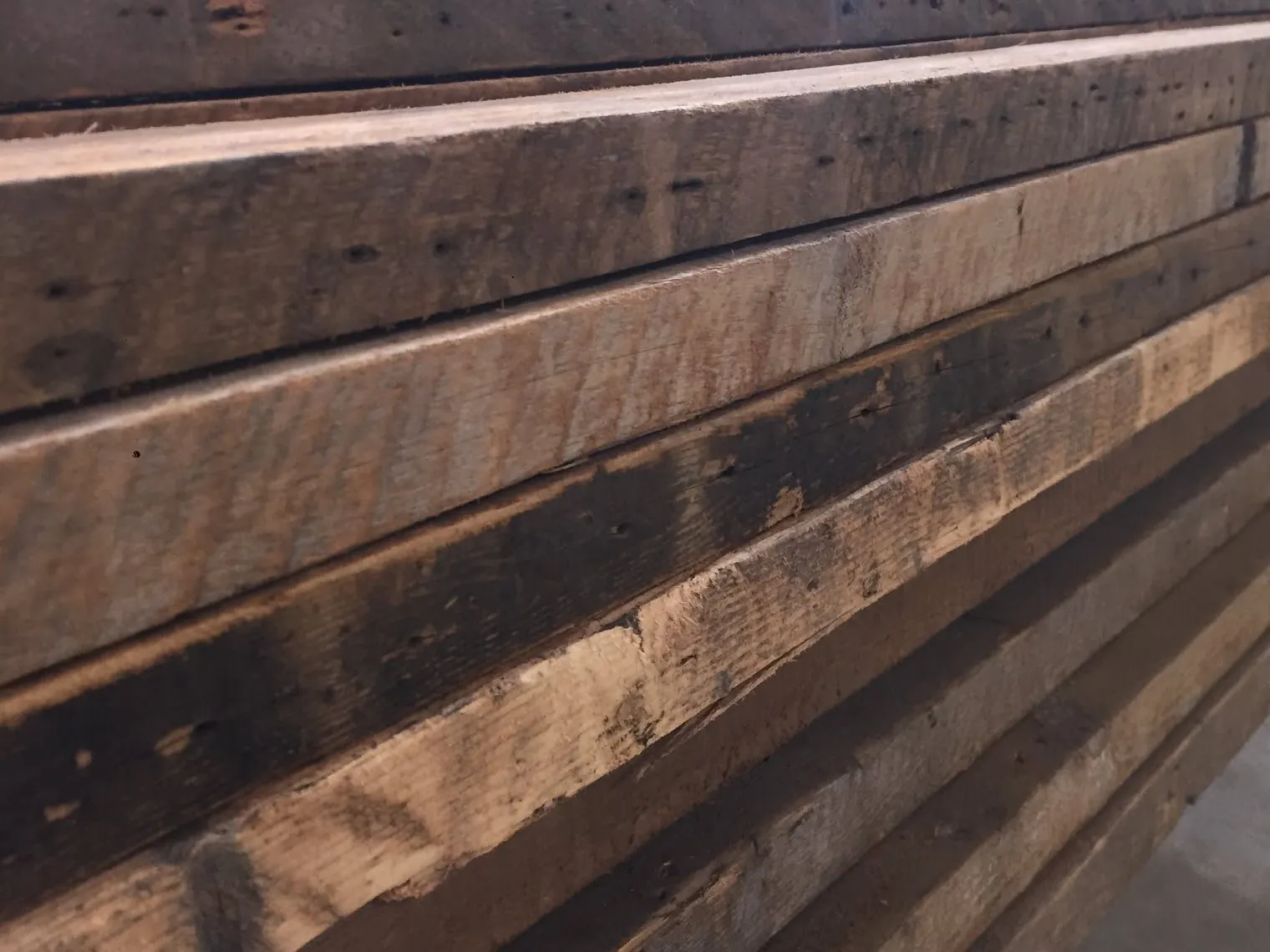
We buy the building
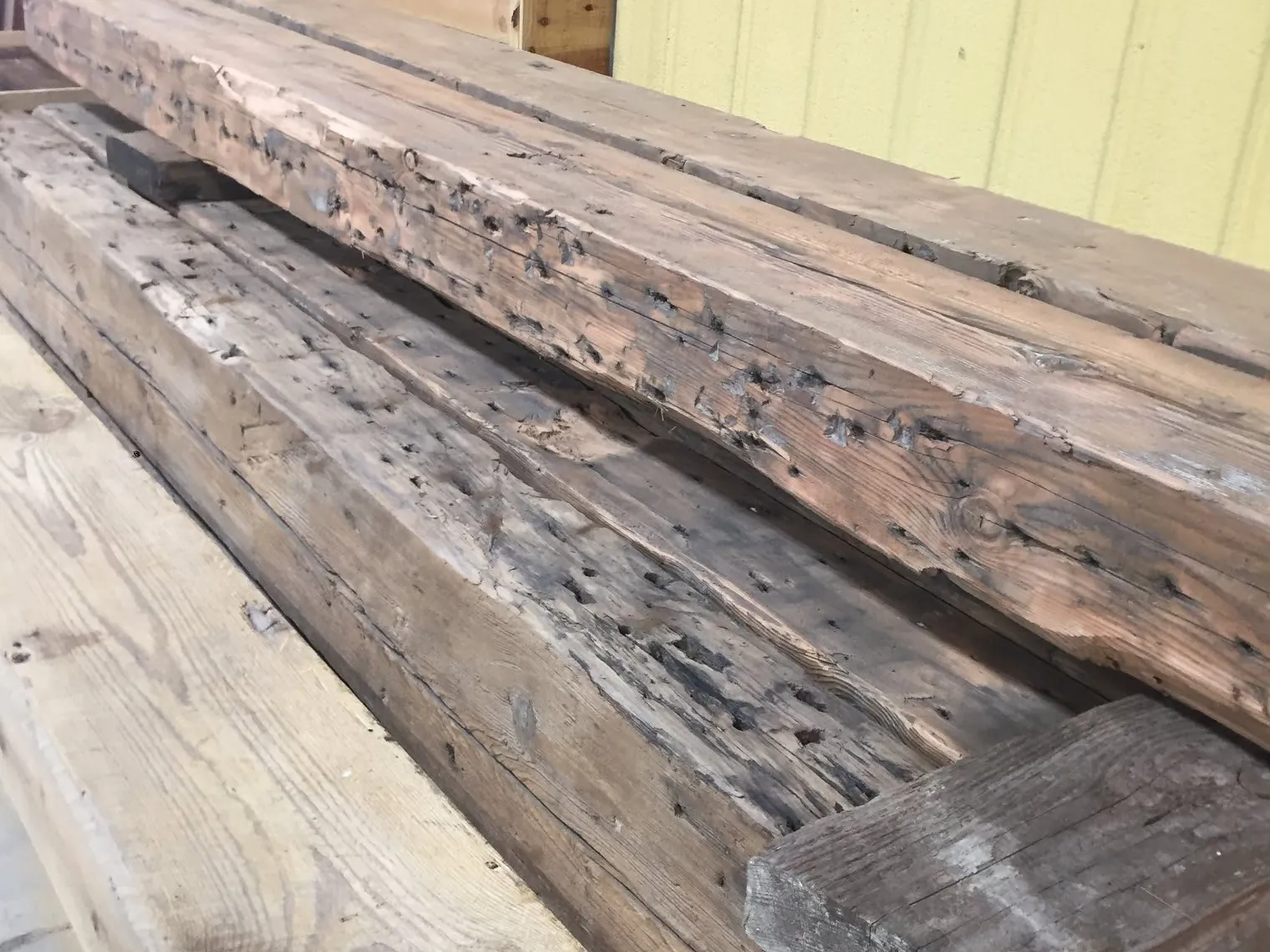
Textile mills built in the late 1800s, cotton warehouses, factories and barns across the South, usually already scheduled for demolition. We take the timbers off the demo crew's hands.
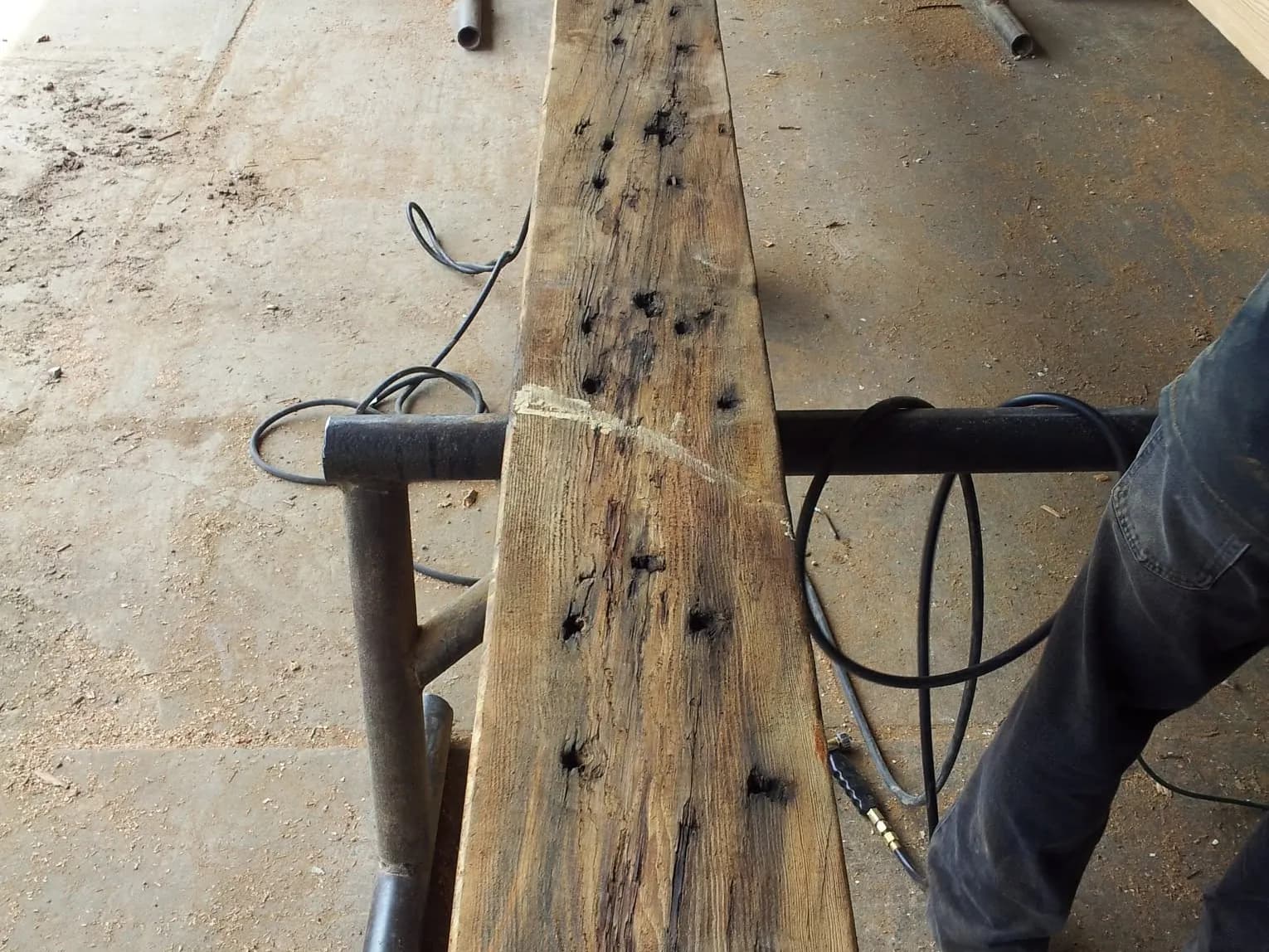
The iron comes out
A hundred and fifty years of nails, spikes, lag bolts and embedded hardware, pulled by hand and then confirmed with a metal detector before anything goes near a blade.
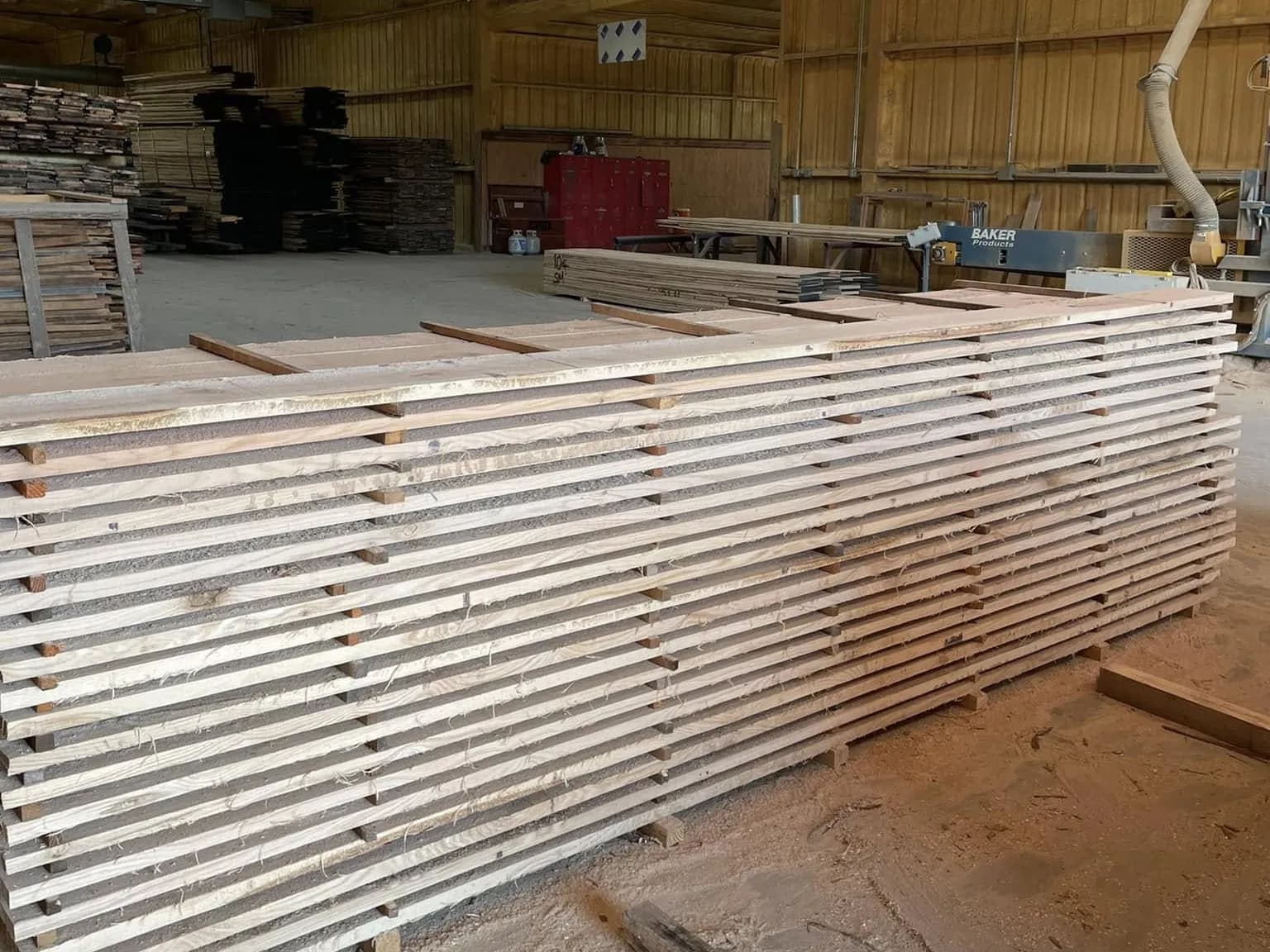
It goes in the kiln
Down to six to eight percent moisture so it will live in a conditioned house without cupping. This is also what kills anything still living in the wood.
It gets graded
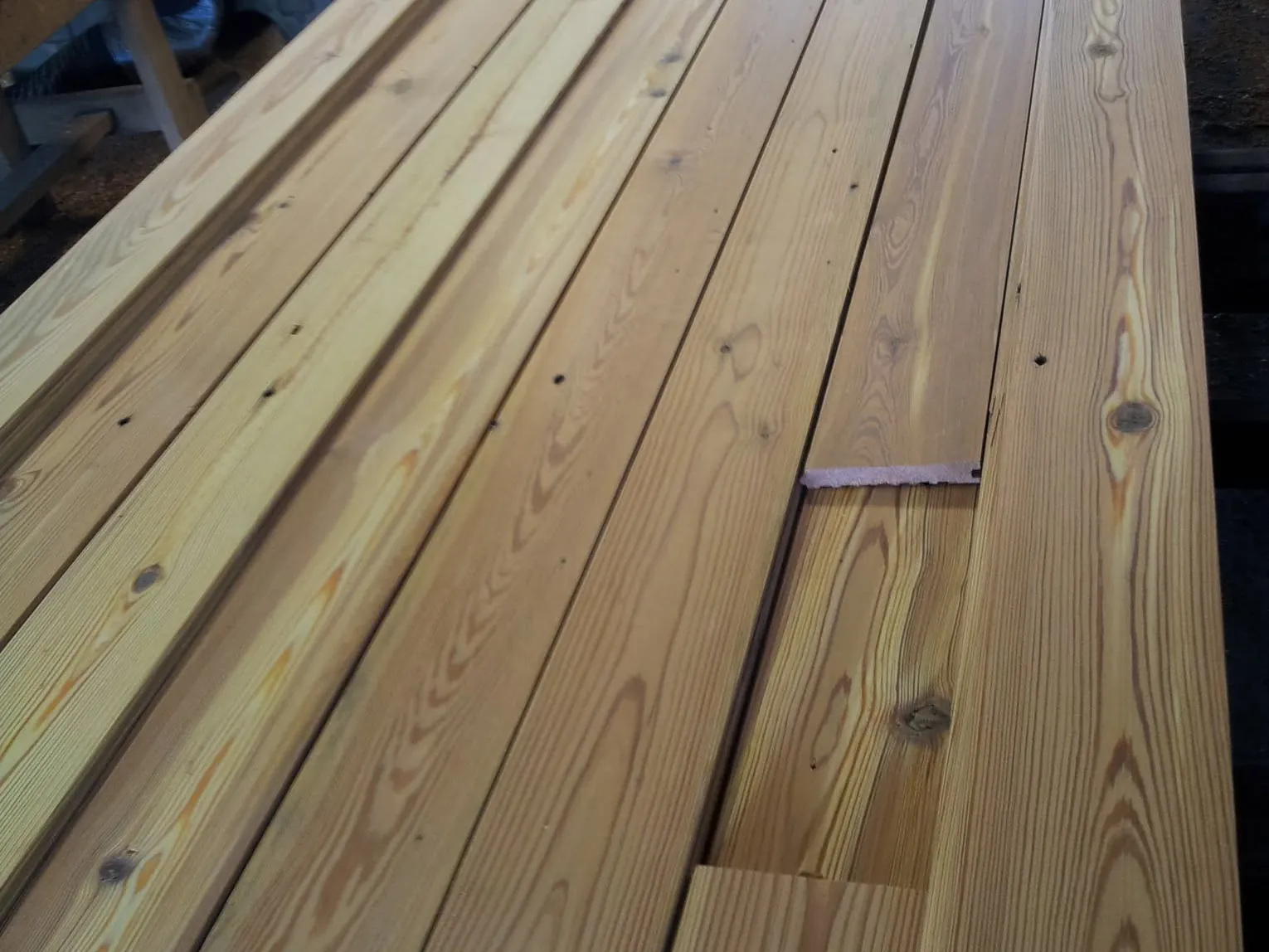
Select, character, or cabin. The call is about how much nail hole, checking and mineral streak is in the face — not about whether the board is sound.
It gets milled
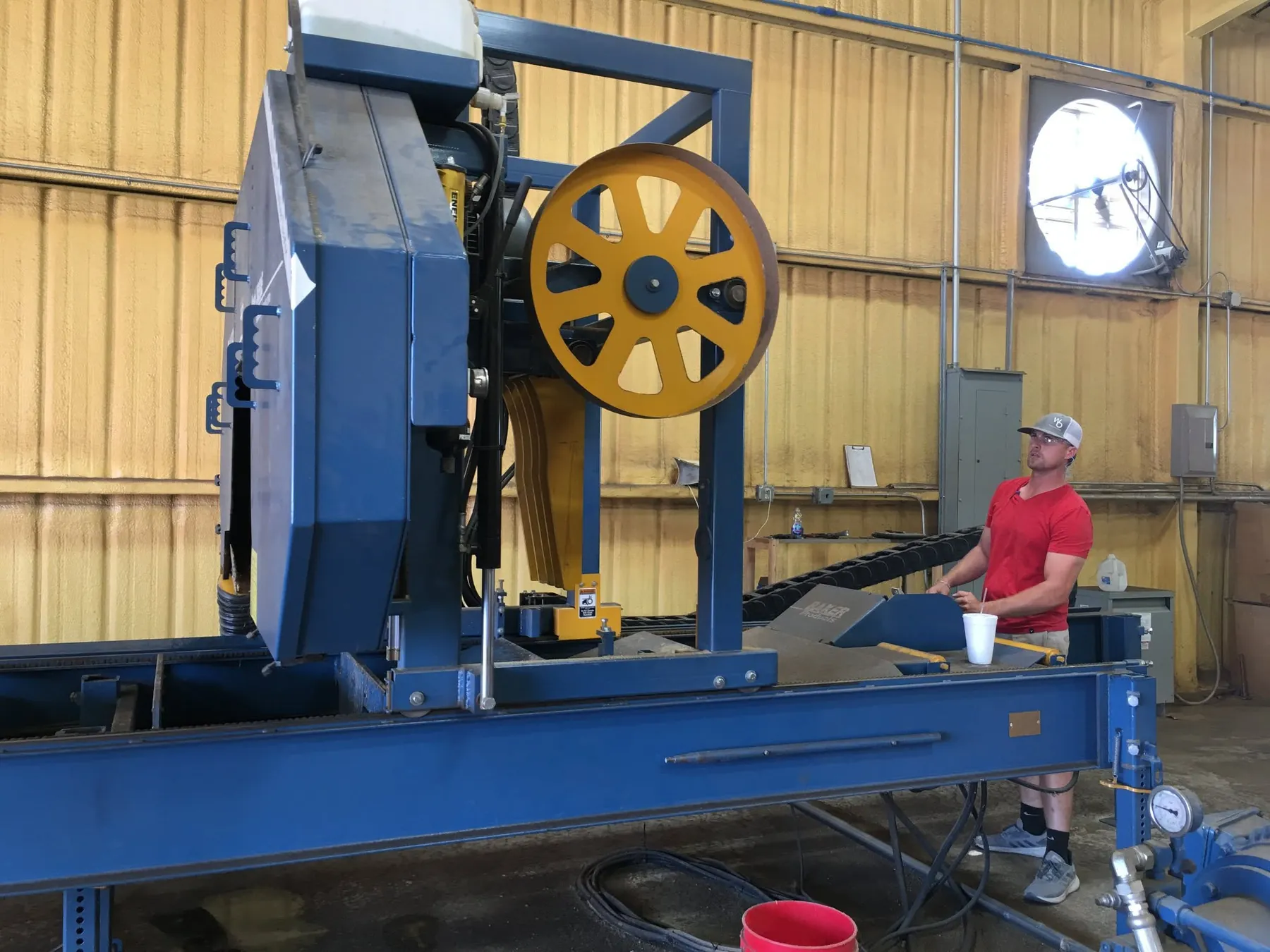
Straight-line ripped, moulded to tongue and groove, end matched, and run to the width you asked for. Skip planed or dirty top if you want the original saw face kept. Big timbers go through the beam saw — that's Dustin on it — which takes pieces up to forty feet.
It ships
Bundled and wrapped. On our own trailer through Louisiana, Texas, Mississippi and Alabama; freight anywhere else. Let it acclimate in the house, not in the trailer.
A floor, once it's down
Photographs flatten reclaimed wood. The thing that does not come through in a still is the way the light moves across two hundred years of grain when you walk past it.
This is a bedroom we finished, shot on the day it was done.